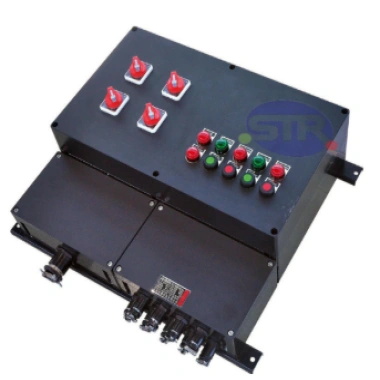
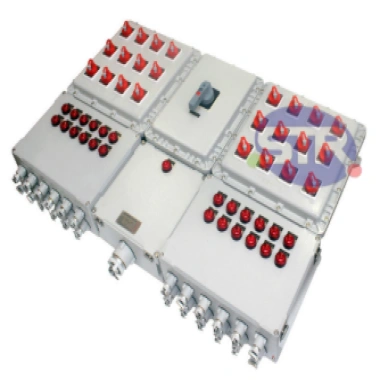
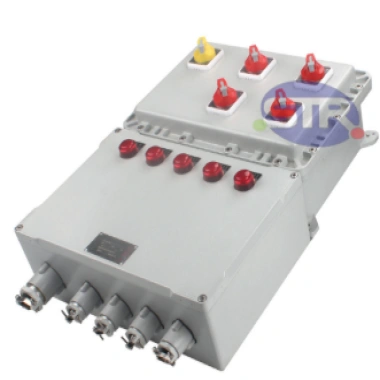
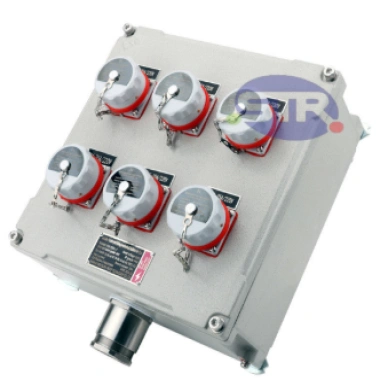
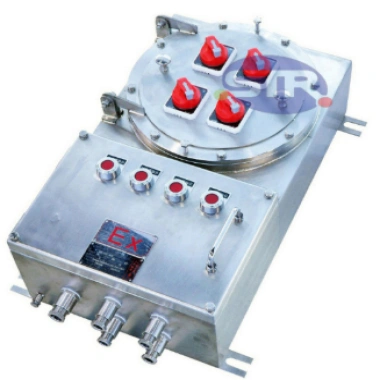
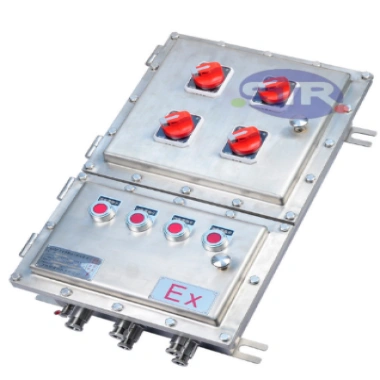
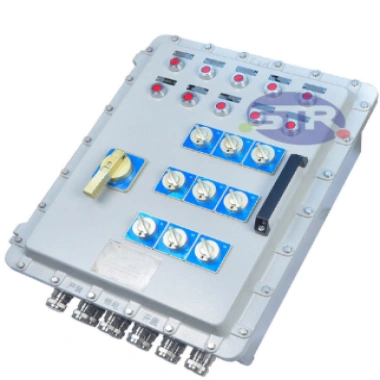
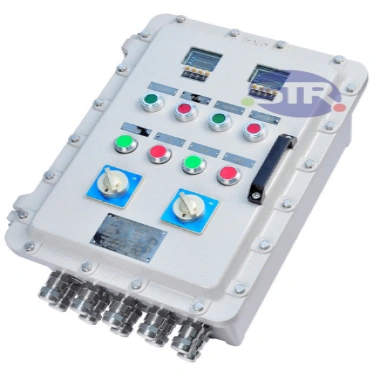
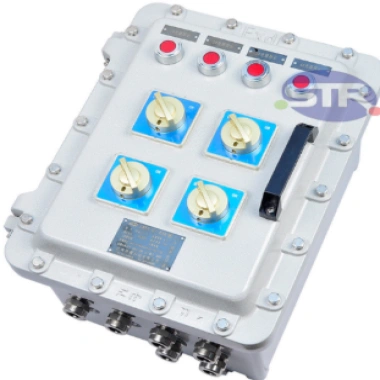
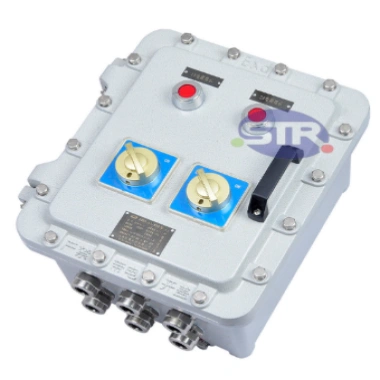
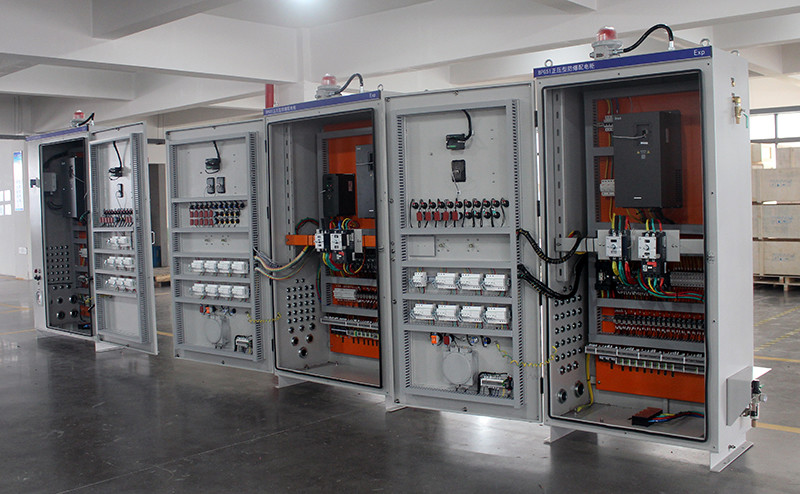
Explosion-Proof Pressurized Enclosure BPG51


GB/T3836.1、GB/T3836.2、GB/T3836.3、GB/T3836.4、GB/T3836.5、GB/T3836.9、GB/T3836.15、GB/T3836.31、IEC 60079-0、IEC 60079-1、IEC 60079-2、IEC 60079-7、IEC 60079-11、IEC 60079-14、IEC 60079-18、IEC 60079-31

| Rated Voltage (V) | Main Circuit Rated Current (A) | Branch Circuit Rated Current (A) | Explosion-Proof Marking | Protection Rating | Corrosion Resistance Rating |
|---|---|---|---|---|---|
| AC 690V,660V,440V,400V,380V, 230V,220V,110V,48V,36V,24V,12V DC 220V,110V,48V,36V,24V,12V |
In≤50 | In≤50 | Ex db eb mb ib pxb IIC T6 Gb, Ex ib pxb tb mb IIIC T80°C Db |
IP66 | WF1 WF2* |
| 50<In≤125 | 50<In≤125 | Ex db eb mb ib pxb IIC T5 Gb, Ex ib pxb tb mb IIIC T95°C Db |
|||
| 125<In≤630 | 125<In≤500 | Ex db eb mb ib pxb IIC T4 Gb, Ex ib pxb tb mb IIIC T130°C Db |
| User Gas Supply Pressure (MPa) | Gas Supply Temperature (°C) | Purge Flow Rate (L/min) | Purge time (min) | Leakage rate (L/min) | Gas consumption (m³/h) | Pressure regulator filter set pressure (MPa) | Normal operating pressure range (Pa) | Lower alarm pressure limit (Pa) | Upper alarm pressure limit (Pa) | Lower power cutoff pressure limit (Pa) | Upper power cutoff pressure limit (Pa) |
|---|---|---|---|---|---|---|---|---|---|---|---|
| Purified Air or Nitrogen 0.2–0.8 | ≤40 | ≥180L | ≥30 | ≤60 | During ventilation 8–10 Normal operation 2–5 |
0.05 | 150~600 | 60~100 | 500~1000 | <60 | >1000 |
1. Positive pressure explosion protection is a specialized explosion-proof design approach. Its primary principle involves isolating combustible substances from ignition sources to achieve explosion prevention. Specifically, the control system within the explosion-proof control cabinet works in conjunction with the gas supply system to introduce protective gas from a safe area into the positive pressure chamber. After thoroughly purging and displacing any combustible gases within the chamber, a constant pressure is maintained inside. This prevents the ingress of combustible gases or conductive dust from the hazardous external environment, thereby achieving explosion protection.
2. Based on pressure maintenance methods, positive pressure systems primarily fall into two categories: those utilizing dilution airflow and those employing leakage compensation.
3. Positive pressure with dilution airflow involves continuous flow of protective gas through the chamber. This method not only meets explosion-proof requirements but also dissipates heat generated by internal components during operation. It is therefore more suitable for installing high-heat-generating electrical components or equipment such as variable frequency drives, soft starters, high-power thyristors, and electric motors. A drawback is the substantial airflow requirement, necessitating sufficient flow and pressure from the user’s on-site gas source.
4. Positive pressure with leakage compensation involves a control system continuously monitoring the pressure within the positive pressure chamber. An electromagnetic valve regulates the inflow and outflow of protective gas. When the chamber pressure drops too low, the inlet valve opens to replenish gas, raising the pressure back to the operational range. When the pressure becomes too high, the outlet valve opens to vent gas, lowering the pressure back to the operational range. Since the protective gas does not flow continuously, positive pressure enclosures with leak compensation are suitable for housing low-voltage electrical components with low heat generation, such as various electrical control systems.
5. Per national standards, positive pressure explosion-proof control cabinets must also incorporate interlocking and alarm functions. Specifically, the positive pressure chamber must remain de-energized until the ventilation process is complete or the chamber pressure reaches the operational range to ensure safety. When the pressure in an operational positive pressure chamber falls below the set alarm lower limit or exceeds the upper limit, the control system initiates corrective actions while triggering audible and visual alarms to alert users. If the control system’s corrective actions prove ineffective and the pressure continues to decrease or increase beyond the preset power cutoff lower or upper limits, the system must promptly disconnect power to the positive pressure chamber and halt operation.
6. From the above, the positive pressure explosion-proof design approach differs from other explosion-proof types. With reasonable design of the control system and protective gas pressure/flow, the positive pressure chamber offers greater dimensional flexibility. This enables production of larger-volume products, and internal electrical components/equipment can be installed per user requirements or by the user themselves, significantly enhancing user expandability.
1. The housing is fabricated from high-quality carbon steel or stainless steel via welding, with a high-pressure electrostatic powder coating finish that provides corrosion resistance, anti-static properties, and robust reliability.
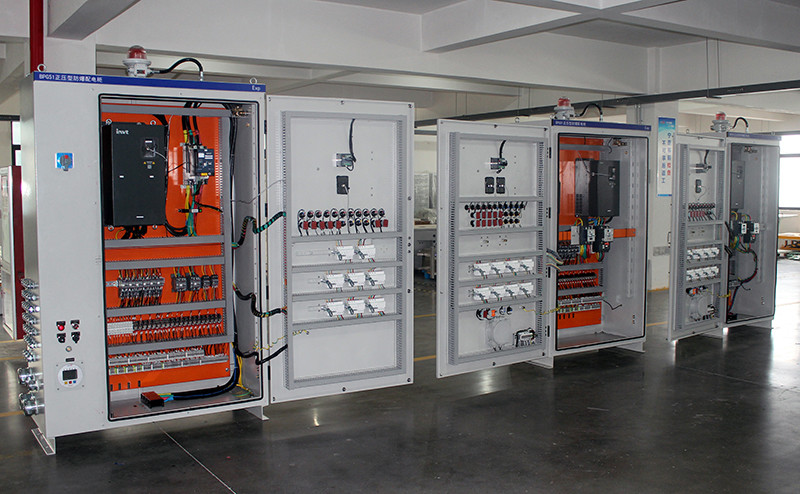
2. Modular structural design allows the positive pressure chamber and control chamber to be configured in vertical, horizontal, or front-to-back combinations, or installed separately.
3. Integrated gas pressure regulation and filtration system requires only connection to an on-site industrial gas source, eliminating the need for additional gas components.
4. Equipped with spark and particle baffles; exhaust from the positive pressure chamber can be vented locally for safety and reliability;
5. Control system utilizes a PLC programmable logic controller for stable, reliable operation and rapid response;
6. User-friendly human-machine interface with LCD text display integrates multiple functions, reducing control panel buttons and indicator lights;
7. Equipped with communication interfaces for remote centralized monitoring and control;
8. Real-time monitoring of critical parameters including positive pressure chamber pressure and flow rate;
9. Configurable sensor signal types and signal value ranges;
10. Programmable pre-ventilation delay time to ensure complete exhaustion of combustible gases before chamber energization;
11. Allows custom setting of working pressure range, alarm pressure range, and positive pressure chamber power cutoff pressure range based on on-site gas supply pressure conditions;
12. Enables setting of positive pressure chamber dimensions according to actual conditions, enhancing control program versatility;
13. Program automatically calculates ventilation duration based on relevant parameters;
14. Modular program design allows different control functions by simply loading different programs;
15. Equipped with a system fault analysis program that alerts users via flashing text on the HMI for convenient troubleshooting;
16. The positive pressure chamber can accommodate various detection instruments, analytical instruments, display instruments, low-voltage electrical equipment, frequency converters, soft starters, and diverse electrical control systems, offering flexible adaptability.




1. Suitable for Zone 1 and Zone 2 locations in explosive gas environments;
2. Suitable for Class IIA, IIB, and IIC explosive gas environments;
3. Suitable for Zone 21 and Zone 22 locations in explosive dust environments;
4. Suitable for Class IIIA, IIIB, and IIC explosive dust environments;
5. Suitable for temperature classes T1 to T6, T5, and T4;
6. Suitable for hazardous environments in petroleum extraction, refining, chemical processing, military facilities, offshore oil platforms, tankers, metal fabrication, pharmaceuticals, and similar industries;
7. Suitable for explosion-proof treatment of products with larger dimensions, higher internal component temperature rises, or complex electrical circuits;
8. Features two treatment types: dilution airflow and leakage compensation.