Explosion-Proof Centrifugal Fan B4-72

GB/T3836.1、GB/T3836.2、GB/T3836.31、IEC60079-0、IEC 60079-1、IEC 60079-31

| Explosion-Proof Marking | Protection Rating | Cable Outer Diameter | Inlet Thread |
|---|---|---|---|
| Ex db IIC T4 Gb Ex tb IIIC T135°C Db |
IP54 | Φ10~Φ14 Φ15~Φ23 |
NPT3/4 NPT1 1/4 |
1. The fan transmission methods are categorized into four types: A, B, C, and D. Models No. 2.8 to 5 utilize Type A transmission; Model No. 6 employs both Type A and Type C transmission; Models No. 8 to 12 utilize both Type C and Type D transmission; Models No. 16 to 20 utilize Type B transmission.
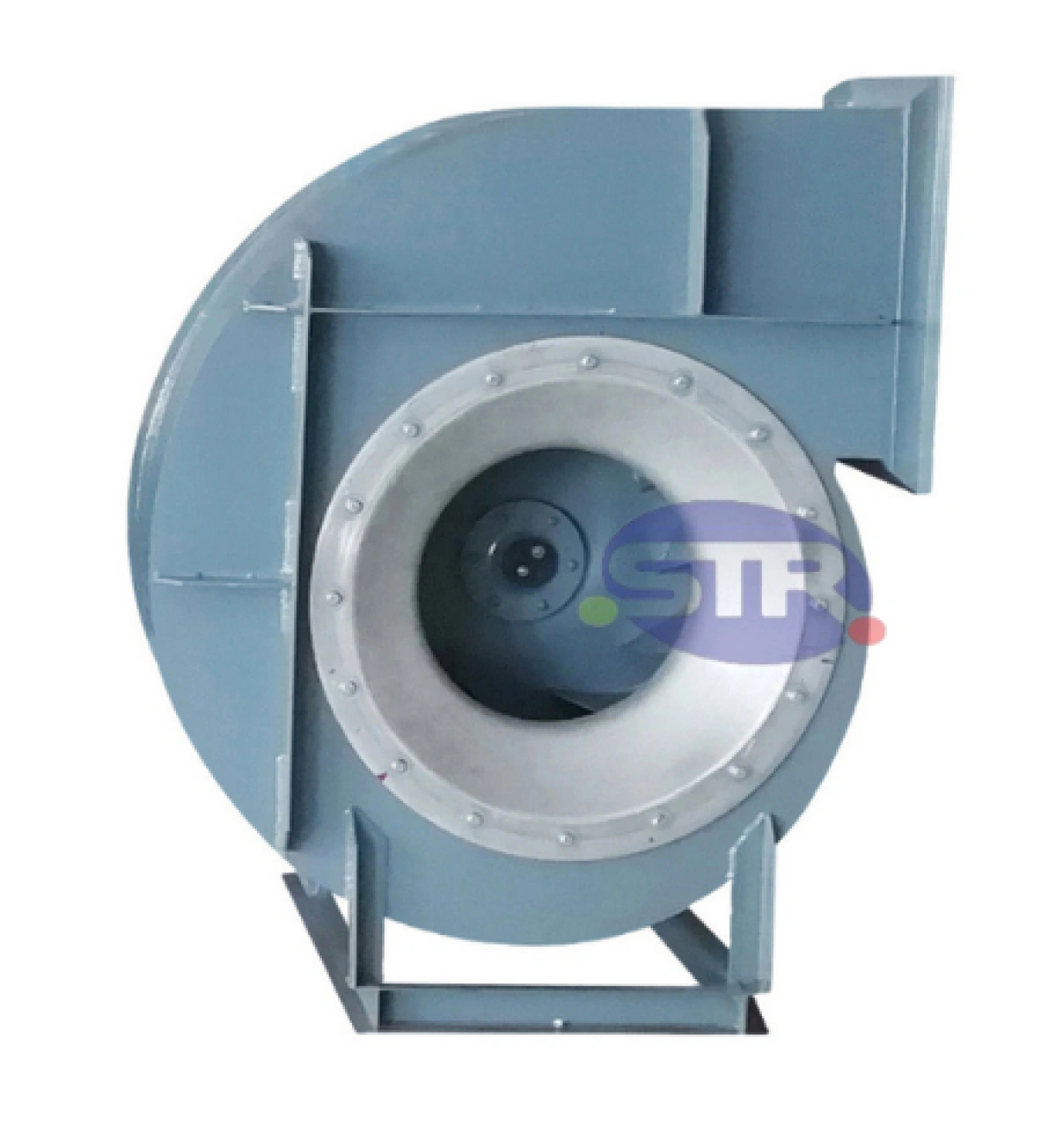
2. Ventilators No. 2.8A–6A primarily consist of an impeller, casing, inlet, and motor. Models No. 6C and No. 8–20 incorporate the aforementioned components plus a drive assembly.
3. Impeller: Constructed with 10 backward-curved aerofoil blades, a curved hub cover, and a flat rear disc. Manufactured from steel plate or cast aluminum alloy, it undergoes dynamic and static balancing calibration and overspeed operation testing. Features high efficiency, stable and reliable operation, and excellent air performance;
4. Casing: Available in two configurations. Models No. 2.8–12 feature a monolithic casing that cannot be disassembled. Models No. 16–20 employ a three-piece casing design: split horizontally into two halves, with the upper section further divided vertically along the centerline into two halves connected by bolts. This facilitates impeller installation and removal during maintenance.
5. Inlet: Constructed as an integral structure mounted on one side of the fan. Its cross-section parallel to the axial direction features a curved shape to ensure smooth airflow entry into the impeller with minimal loss;
6. Drive: Consists of the main shaft, bearing housing, rolling bearings, and either a pulley or coupling;
7. Grounding: Grounding screws are provided inside and outside the motor housing for steel pipe or cable wiring.


1. Suitable for Zone 1 and Zone 2 locations in explosive gas environments;
2. Suitable for Class IIA, IIB, and IIC explosive gas environments;
3. Suitable for Zone 21 and Zone 22 locations in explosive dust environments;
4. Suitable for Class IIIA, IIIB, and IIC explosive dust environments;
5. Suitable for temperature classes T1 to T4;
6. Widely used in hazardous environments such as oil refining, chemical processing, textiles, and military industries, as well as offshore oil platforms and oil tankers;
7. Indoor and outdoor use.